



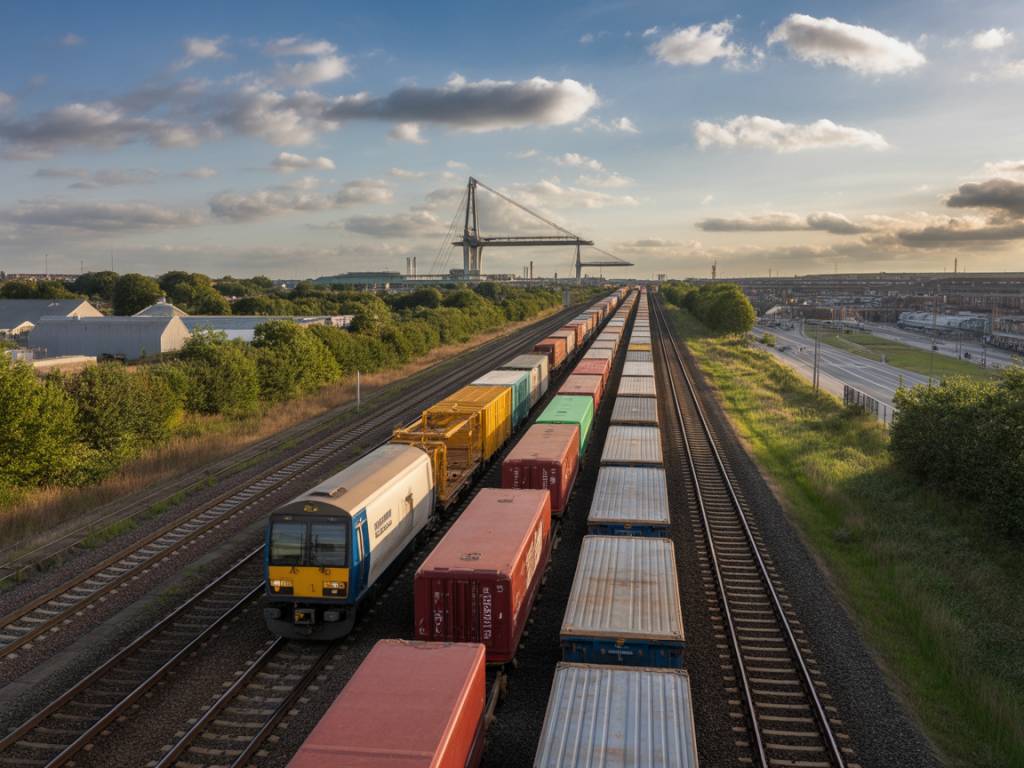

For UK supply chains, rail freight is no longer a niche option reserved for bulk commodities and long-established industrial flows. It is increasingly being used as a strategic tool for resilience, cost control, carbon reduction, and service reliability. As shippers face tighter margins, labour shortages, congestion on key corridors, and growing pressure to decarbonise, multimodal rail freight is emerging as a practical competitive advantage.
The shift is not simply about moving goods by train instead of truck. It is about designing supply chains that combine rail, road, ports, inland terminals, and digital coordination into a more efficient whole. In this model, rail carries the long-haul trunk movement while road handles the first and last mile. The result is a logistics network that can support higher volumes, lower emissions, and more predictable transit times across the UK and beyond.
Why multimodal rail freight is gaining momentum
The UK logistics market has been under sustained pressure from multiple directions. Road freight remains essential, but it is exposed to driver shortages, volatile fuel prices, congestion around major cities, and unpredictable delays at busy junctions and ports. At the same time, many businesses are under pressure from customers, regulators, and investors to demonstrate meaningful progress on emissions reduction.
Multimodal rail freight addresses several of these challenges at once. Rail can move large volumes over long distances with relatively low emissions per tonne-kilometre, while integrated road transport provides flexibility at both ends of the journey. This creates a system that is often more stable than relying solely on road transport, especially for time-sensitive and high-volume flows.
For supply chain managers, the appeal lies in the balance between efficiency and resilience. Rail is not always the fastest option door-to-door, but it can be the most dependable choice when the objective is to protect service levels over the long term. As more freight forwarders, retailers, manufacturers, and third-party logistics providers adopt multimodal strategies, rail is becoming part of a broader competitive play rather than a standalone transport mode.
The economic case for rail in UK supply chains
One of the strongest arguments for multimodal rail freight is cost stability. Road transport costs can rise quickly when fuel prices increase or when capacity tightens during peak periods. Rail, by contrast, can offer better predictability on trunk movements, especially when volumes are consistent and routes are well established. This is particularly valuable for businesses shipping heavy, low-margin, or high-volume goods.
Rail is often more economical on longer distances, where the fuel efficiency and capacity advantages become more pronounced. When combined with intermodal terminals and efficient road connections, the total landed logistics cost can become more competitive than expected. This is not just a matter of direct transport pricing. It also includes inventory holding, disruption risk, and the operational cost of missed delivery windows.
Typical advantages for businesses may include:
- Lower sensitivity to road congestion and motorway delays
- Improved planning for regular trunk movements
- Reduced exposure to driver availability issues
- Potentially lower costs for dense or heavy freight over long distances
- Better alignment with sustainability-linked procurement requirements
Many companies are also using rail freight to improve network design. Instead of running multiple long-distance lorry journeys, they may consolidate freight at a rail-connected hub and then distribute regionally from a smaller number of terminals. This can reduce duplicated mileage and improve asset utilisation across the transport network.
How multimodal rail freight works in practice
Multimodal freight is built around the integration of different transport modes into a single logistics chain. In the UK, that often means containers, swap bodies, or trailers moving by rail between inland terminals, ports, or logistics parks, with road transport handling pickup and final delivery. The customer experiences the shipment as one coordinated movement even though several operators and assets may be involved.
The model works best when the rail leg is planned around predictable flows. This is why sectors such as retail distribution, consumer goods, automotive parts, packaging, construction materials, and manufacturing inputs are increasingly suitable for rail-based intermodal solutions. These sectors often move regular volumes that justify scheduled services and fixed terminal routines.
A typical journey may look like this: goods are loaded at a distribution centre, moved by truck to an intermodal terminal, transferred to rail for the long-haul segment, then unloaded at a destination terminal and completed by road to the final consignee. The success of this model depends on precise timing, equipment availability, terminal efficiency, and strong coordination between hauliers, rail operators, and warehouse teams.
Digital visibility tools are playing a bigger role as well. Shippers now expect real-time tracking, status updates, and ETA visibility across all transport legs. As rail operators and logistics providers improve data integration, multimodal services become easier to manage and more attractive to businesses accustomed to road freight visibility.
Environmental performance and decarbonisation pressure
Decarbonisation is a major driver of rail freight growth in the UK. As organisations publish sustainability strategies and carbon reduction targets, freight transport has come under sharper scrutiny. Road freight will remain central to the supply chain, but rail offers a clear opportunity to reduce emissions on the longest and most energy-intensive segments.
From a reporting perspective, moving freight by rail can help reduce Scope 3 emissions in many supply chains. That matters to retailers, manufacturers, and importers that are under pressure to measure and lower the emissions associated with logistics procurement. Rail is not a complete solution, but it is one of the few immediately available options that can deliver measurable gains without requiring a full redesign of the business model.
The environmental case is particularly strong when rail is used to replace multiple long-distance truck journeys. By consolidating freight into larger loads and shifting the line-haul leg to rail, businesses can improve payload efficiency and reduce overall carbon intensity. For many procurement teams, this has become a differentiator in supplier selection and contract renewals.
Common sustainability benefits include:
- Lower emissions per tonne moved over long distances
- Reduced road mileage on motorways and arterial routes
- Better support for ESG reporting and carbon disclosure
- Improved alignment with customer sustainability commitments
- Reduced congestion in urban and port-adjacent corridors
Infrastructure, terminals, and network capability
The growth of multimodal rail freight depends heavily on infrastructure. Rail freight cannot scale without reliable terminals, suitable capacity on key routes, and efficient transhipment facilities that keep goods moving smoothly between modes. In the UK, this means that terminal location, yard design, and last-mile road access are just as important as rail line capacity itself.
Modern intermodal terminals are increasingly being developed as logistics hubs in their own right. They support container handling, warehousing, cross-docking, and regional distribution. Their value lies not only in transferring freight from rail to road, but also in enabling inventory positioning closer to end markets. This can shorten final delivery times and improve service responsiveness.
Capacity constraints remain a challenge. Rail freight must compete for path availability on a network that also serves passenger traffic, which can limit flexibility. However, investment in freight corridors, terminal expansion, and strategic freight routes is gradually improving the case for larger-scale multimodal operations. Businesses that plan ahead can secure better access to these assets and avoid being locked into more expensive road-only models.
The role of reliability in competitive advantage
In supply chain management, reliability often matters more than theoretical speed. A transport mode that is slightly slower but consistently predictable can outperform a faster option that is vulnerable to disruption. This is one reason multimodal rail freight is gaining favour among businesses that need to stabilise service levels.
Rail can reduce exposure to some of the most common road freight problems: traffic congestion, weather-related road closures, driver delays, and emissions restrictions in urban areas. When combined with strong terminal operations and contingency planning, it offers a robust foundation for scheduled supply chains. This is especially relevant for businesses with regular replenishment cycles and high penalties for late delivery.
Reliability also affects inventory strategy. If logistics planners trust the transit profile of a rail-based trunk move, they may be able to reduce safety stock or improve replenishment cadence. Over time, this can release working capital and create a more agile supply chain.
Where rail freight creates the most value
Not every freight flow is ideal for rail. The strongest use cases tend to involve regular volume, medium to long distances, and goods that can be consolidated efficiently. Heavy commodities have long been served by rail, but the most interesting growth is now happening in general cargo and intermodal traffic where rail is becoming a competitive alternative to long-haul trucking.
Industries that often benefit include:
- Retail and grocery distribution
- Consumer packaged goods
- Automotive components and finished vehicles
- Building materials and industrial products
- Import/export flows through ports and inland terminals
For these sectors, rail freight can support frequent, scheduled movements that connect national distribution centres with regional delivery networks. In some cases, it also improves access to port gateways, helping imports and exports move more efficiently between maritime and inland logistics nodes.
What businesses should consider before switching
Moving to multimodal rail freight requires more planning than booking additional truck capacity, but the operational effort can be worthwhile. Companies need to assess route suitability, terminal proximity, handling requirements, service frequency, and the compatibility of packaging and loading units with intermodal equipment.
They should also evaluate the service model carefully. Rail works best when the supply chain is designed around predictable schedules and standardised processes. That means aligning warehouse cut-off times, booking windows, dispatch plans, and delivery appointments with the rail timetable. Businesses that treat rail as a tactical backup rather than a planned part of the network often miss the main benefits.
Key decision factors include:
- Distance and shipment frequency
- Availability of nearby rail terminals
- Unit load compatibility, such as containers or swap bodies
- Required delivery windows and service levels
- Integration with warehouse and transport management systems
- Carbon reporting objectives and procurement priorities
A strategic option for the next phase of UK logistics
Multimodal rail freight is becoming more than a sustainability initiative. It is increasingly a strategic choice for businesses that want to improve resilience, reduce exposure to road volatility, and build a more efficient freight network. As the UK supply chain continues to adapt to economic uncertainty and structural labour constraints, rail offers a compelling mix of scale, predictability, and environmental performance.
The companies most likely to benefit are those that view freight transport as a network design problem rather than a simple rate comparison exercise. They are looking beyond the price per mile and considering service reliability, carbon impact, inventory efficiency, and long-term capacity access. In that context, rail freight is not just relevant; it may become one of the defining competitive advantages in modern UK logistics.
Summary: Multimodal rail freight is reshaping UK supply chains by combining rail efficiency with road flexibility. It helps businesses reduce emissions, improve reliability, manage costs, and strengthen resilience. As terminals, digital tools, and infrastructure improve, rail is becoming a practical strategic advantage for high-volume, long-distance logistics.