


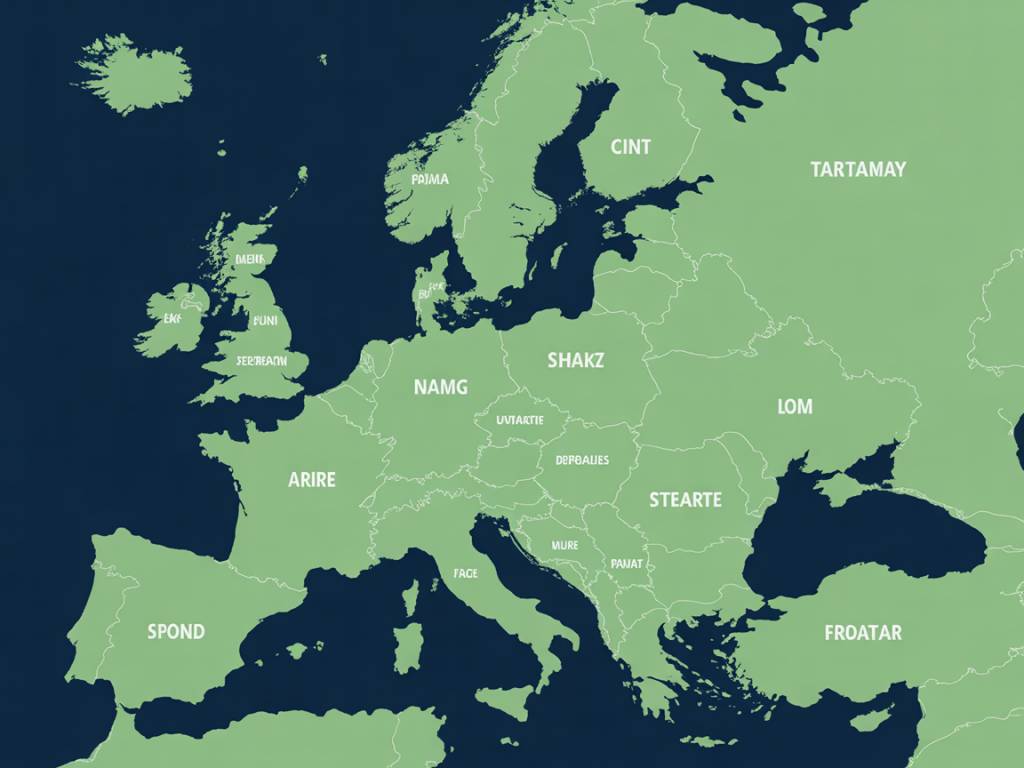
Nearshoring as a Strategic Reset for UK–Europe Supply Chains
Nearshoring is no longer a theoretical exercise for UK and European supply chain leaders. It has become a practical response to a decade of shocks: pandemic disruptions, container shortages, Brexit friction, and geopolitical volatility. The traditional model of long, lean, Asia-centric supply chains is being re-evaluated in favour of shorter, more resilient regional networks.
For UK-based companies, this shift is particularly significant. The UK’s departure from the EU has introduced new customs, compliance, and administrative burdens at the very moment businesses are seeking greater agility. As a result, the UK–Europe supply chain map is being redrawn, with nearshoring playing a central role in both strategic design and operational decision-making.
The Drivers Behind the Move to Nearshoring
Nearshoring from Asia to Europe is not driven by a single factor. Instead, it reflects a cumulative reassessment of risk, cost, and service performance.
Key drivers include:
- Supply chain risk reduction: Natural disasters, pandemics, port congestion, and geopolitical tensions have highlighted the fragility of extended global chains.
- Lead-time pressure: E-commerce and omnichannel models have conditioned customers to expect rapid replenishment and high availability, incompatible with long ocean transit times.
- Regulatory friction: Brexit-related paperwork, customs delays, and rules-of-origin requirements create friction on UK–EU flows that global strategies must now accommodate.
- Cost volatility: Container rates, fuel surcharges, and currency fluctuations undermine the predictability of total landed costs from distant suppliers.
- Sustainability goals: ESG targets and carbon accounting push companies to reconsider the environmental footprint of long-haul transport.
Taken together, these forces are tipping the scales in favour of regional manufacturing and distribution models, especially for products that are time-sensitive, high-margin, or require frequent design changes.
How Nearshoring Is Reshaping the UK’s Role in European Networks
For decades, the UK acted as a gateway and hub for many international supply chains serving the broader European market. Goods arrived via major ports such as Felixstowe, Southampton, and London Gateway, then moved freely into EU markets. This model is now under scrutiny.
Nearshoring strategies are changing the UK’s position in several ways:
- Shift from EU hub to dual-node networks: Instead of a single UK hub serving both domestic and European customers, many companies are now establishing dual structures: one dedicated network for the UK and another within the EU single market.
- Growth of EU-based consolidation hubs: Inland locations in the Netherlands, Belgium, and Germany are increasingly used as consolidation and value-added service centres for EU customers, with the UK treated as an export destination rather than an integrated leg.
- Selective reshoring to the UK: Some manufacturers are bringing high-value or complex production back to the UK, while sourcing components from nearshore locations in Eastern or Southern Europe.
- Greater segmentation of flows: UK–EU lanes are being redesigned to separate time-critical, high-service SKUs from slower-moving lines, often using different sourcing and inventory strategies.
The net effect is that the UK is becoming more of a specialised node within broader European networks, rather than the natural entry point for the continent.
Key Nearshoring Hotspots for UK and European Businesses
Nearshoring does not mean abandoning global sourcing entirely. Instead, it often complements existing Asian supply with regional alternatives. Several regions are emerging as preferred nearshore partners for UK- and EU-based firms.
Eastern Europe
Countries such as Poland, Czech Republic, Slovakia, Hungary, and Romania are playing an increasingly important role, particularly in manufacturing and assembly. Their appeal includes:
- Competitive labour costs compared with Western Europe, though higher than many Asian countries.
- Proximity to major EU consumer markets, enabling road-based distribution with predictable transit times.
- Strong integration with EU regulatory and customs frameworks.
- Rapidly developing logistics infrastructure, including modern warehouses and intermodal hubs.
For UK companies, Eastern Europe often serves as an intermediate step: components may be sourced globally, assembled in Eastern Europe, and then distributed to EU markets, with selected flows routed to the UK.
Southern Europe and the Mediterranean
Spain, Portugal, Italy, Greece, and nearby North African countries such as Morocco and Tunisia are also featuring prominently in nearshoring strategies.
- Textiles and fashion: Mediterranean countries allow fast lead times, smaller batch sizes, and quick reaction to trends, compared with production in South or East Asia.
- Automotive and components: Established clusters in Spain and Italy support just-in-time and just-in-sequence delivery into European OEMs, with potential spillover benefits for UK-based tier suppliers.
- Food and agribusiness: Proximity and climate diversification support more resilient sourcing strategies for fresh and processed foods.
These regions are also benefiting from investment in ports, rail corridors, and short-sea services that tie them more tightly into Northern European and UK supply routes.
Nearshoring’s Impact on Logistics Network Design
As production and sourcing shift closer to end markets, logistics networks are being redesigned to exploit shorter lead times and reduced transport distances.
Key design changes include:
- More regional DCs, fewer mega-hubs: Instead of one or two continental mega-distribution centres, companies are deploying a network of regional facilities that balance service speed with inventory cost.
- Greater reliance on road and rail: Nearshoring increases the importance of truckload, less-than-truckload, and intermodal rail services connecting factories and DCs across Europe.
- Short-sea shipping growth: Short-sea routes between the UK, Ireland, Benelux, Spain, and the Mediterranean are gaining traction as alternatives to long-haul road routes via the Channel Tunnel or Dover–Calais corridor.
- Dynamic inventory positioning: Inventory is increasingly placed closer to demand hotspots, with analytics used to rebalance stock between UK and EU facilities as demand shifts.
For UK businesses, the question is no longer whether to operate warehousing in the EU, but how many nodes are justified and what role UK facilities should play in the broader European footprint.
Brexit, Compliance, and the Rules-of-Origin Question
One of the less visible but highly influential aspects of nearshoring is the effect of trade agreements and rules of origin. Brexit has redefined how UK–EU supply chains must be structured to benefit from tariff preferences.
Manufacturers that previously imported components from Asia into the UK, assembled finished goods, and then distributed them tariff-free into the EU now face a more complex landscape. To qualify for preferential tariffs under the EU–UK Trade and Cooperation Agreement, a defined proportion of value must be added within the UK or EU.
This has several implications:
- Some final assembly is shifting from the UK into EU member states to maintain tariff advantages.
- Nearshore sourcing from EU or European Economic Area partners is becoming more attractive than importing parts from Asia, especially where margin structures are tight.
- UK and EU manufacturers are reconfiguring their bills of materials to increase local content.
Logistics and supply chain leaders now need deeper collaboration with trade compliance teams and customs brokers when they redesign sourcing networks, to ensure that nearshoring strategies align with regulatory realities and not just operational preferences.
Technology as an Enabler of Nearshore Models
Nearshoring changes the physical shape of supply chains, but it also raises the bar on visibility and coordination. More nodes, more suppliers, and more cross-border flows demand robust digital capabilities.
Essential enablers include:
- Multi-echelon inventory optimisation tools to determine where stock should be held across UK and European networks.
- Transportation management systems (TMS) that can dynamically select carriers across road, rail, and short-sea modes to balance cost and service.
- Supplier collaboration platforms for nearshore manufacturers that enable shared forecasts, production planning visibility, and event management.
- Real-time tracking and analytics to compare performance of nearshore and offshore suppliers on lead time, reliability, and cost.
Companies that underinvest in these systems risk reproducing old inefficiencies in a new geographic configuration. Those that invest are better placed to fine-tune their nearshoring strategies over time rather than treating them as one-off structural decisions.
Practical Considerations for UK Businesses Evaluating Nearshoring
For UK-based organisations considering nearshoring as part of their UK–Europe strategy, several questions are central:
- Which product lines genuinely require shorter lead times or more frequent replenishment?
- How do total landed costs compare between existing offshore suppliers and potential nearshore alternatives, including inventory, risk, and administrative overheads?
- What is the optimal split between UK-based and EU-based inventory for key customer segments?
- Do existing logistics partners have strong capabilities in Eastern and Southern Europe, or is a new provider ecosystem required?
- How will rules-of-origin and customs treatments affect margins under different sourcing scenarios?
A structured network design exercise, combining data modelling, scenario analysis, and pilot implementations, is becoming standard practice for companies reshaping their European footprint.
Outlook: A More Regional, More Complex UK–Europe Supply Landscape
Nearshoring does not herald the end of global supply chains, but it does mark a decisive shift toward more regionalised, multi-layered networks. For the UK and Europe, this means a hybrid future: long-haul sourcing for certain categories will coexist with nearshore production and assembly for others.
The supply chain map is being redrawn in ways that prioritise resilience, responsiveness, and regulatory alignment. UK firms that proactively adapt their sourcing, manufacturing, and logistics strategies to this new map will be better placed to navigate uncertainty and capture emerging opportunities within the European market.
50-word summary: Nearshoring is reshaping UK–Europe supply chains by shortening lead times, diversifying risk, and prompting a redesign of hubs, sourcing strategies, and logistics networks. Eastern and Southern Europe are emerging as key production and distribution locations. Brexit, rules of origin, and sustainability expectations further accelerate the shift towards more regional, digitally enabled supply models.