


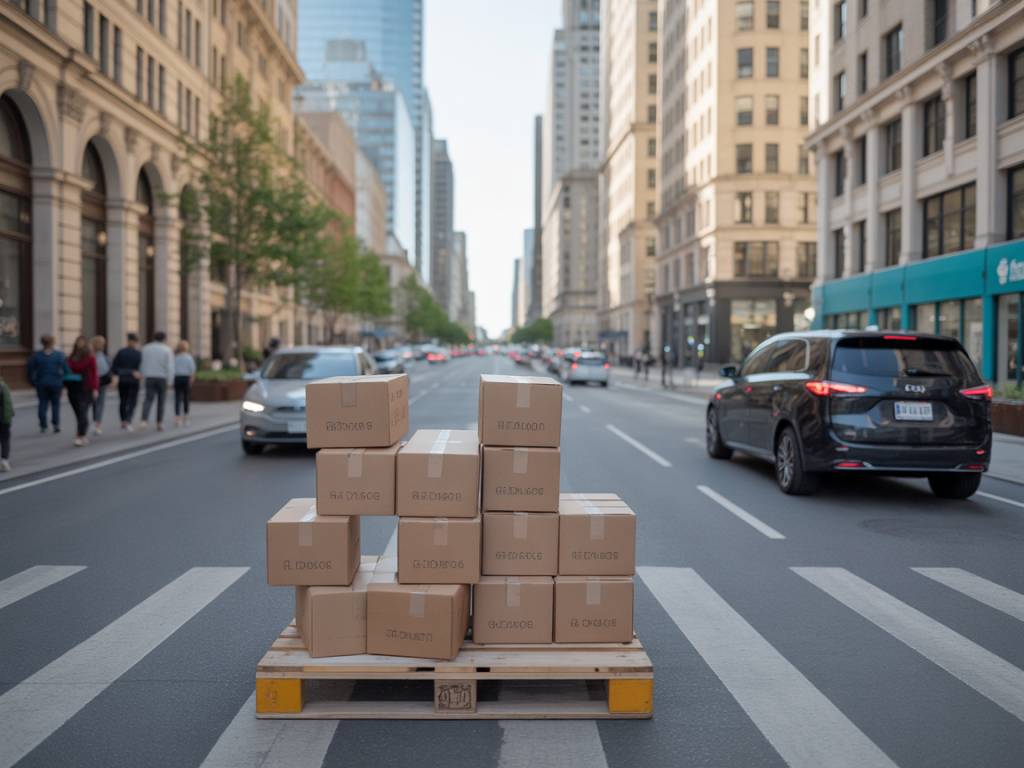
Why urban micro-fulfilment centres are emerging now
Same-day delivery has shifted from premium service to standard expectation in many urban markets. Consumers accustomed to instant digital access now expect similar immediacy for physical goods, especially groceries, pharmaceuticals and everyday essentials. Traditional, large-scale distribution centres at the edge of cities struggle to meet these expectations efficiently and profitably.
Urban micro-fulfilment centres (MFCs) have emerged as a response to this tension. Typically ranging from 500 to 5,000 square metres, these compact facilities are positioned close to dense population clusters and optimised for high-velocity, small-basket orders. They do not replace large regional warehouses; instead, they form an intermediate layer in the network focused on speed and proximity.
The growth of e-commerce, quick-commerce and omnichannel retail has accelerated investment in these sites. For retailers and logistics providers, the question is no longer whether to explore micro-fulfilment, but how to design and operate networks that use them effectively.
Defining the urban micro-fulfilment model
An urban micro-fulfilment centre is best understood not just as a small warehouse but as a specialised node engineered around short lead times, dense order volumes and constrained urban space. Several core characteristics tend to define the model:
- Proximity to demand – located within or near city centres, often embedded in retail stores, basements, or light industrial units.
- Limited SKU range – focused on fast-moving items that drive the majority of local demand, rather than long-tail inventory.
- High automation potential – use of goods-to-person systems, shuttles, AMRs (autonomous mobile robots) or dense storage technologies.
- Short order cycle times – engineered processes to pick, pack and dispatch orders within minutes, not hours.
- Multi-channel integration – servicing home delivery, click-and-collect, and sometimes B2B or dark-store replenishment from the same node.
In practice, the specifics vary widely. Some MFCs operate as dark stores for grocery delivery, others sit behind an existing retail outlet, while some logistics providers are building shared micro-fulfilment hubs that serve several merchants at once.
How micro-fulfilment reshapes same-day delivery logistics
Urban delivery used to be dominated by a simple paradigm: orders left a large, peripheral warehouse in line-haul trucks, then passed through local depots or cross-dock facilities before entering last-mile routes. This structure made sense for next-day delivery, but it becomes strained when customers expect delivery within a few hours.
Micro-fulfilment centres change the geometry of the network in several important ways.
- Shorter last-mile legs
With inventory held closer to the customer, the distance travelled for each delivery drops dramatically. This enables tighter time windows and higher density routes, increasing the number of drops per hour for couriers. - More flexible dispatch patterns
Rather than batching orders for scheduled departures, MFCs can support continuous, on-demand dispatch. Orders can be released to riders, vans or cargo bikes as soon as they are picked and packed, enabling near real-time service during peak hours. - Redeployment of transport assets
Because the legs are shorter, operators can shift more volumes to low-emission modes such as bikes, e-cargo trikes and small EVs. This directly supports sustainability commitments and helps mitigate congestion and access restrictions in city centres. - Reduced reliance on large regional inventory for fast movers
High-turnover items can be stocked in urban nodes, which reduces the number of urgent shipments from regional DCs and stabilises trunk flows. Regional warehouses can focus more on replenishment and long-tail inventory.
Automation as an enabler, not a prerequisite
The image of a micro-fulfilment centre often involves dense robotic storage systems and automated picking solutions. Automation is indeed a powerful enabler, particularly in cities where real estate is expensive and labour is scarce. However, full automation is not the only pathway.
Retailers are experimenting with a spectrum of approaches:
- Manual “dark store” operations – simple shelving and handheld devices, often used as an entry stage to test demand.
- Semi-automated systems – conveyor-assisted picking, put-to-light walls, or AMRs for stock movement that reduce travel time for associates.
- High-density robotic storage – shuttle systems, cube-based storage or robotic picking solutions that maximise throughput per square metre.
The most successful deployments start from a clear economic rationale: what service level is required, what order volumes are expected, and what labour and property costs must be managed? Only then does the right level of automation become apparent.
Network design and inventory strategy
Integrating micro-fulfilment centres into an existing supply chain requires careful network design. Adding nodes introduces complexity, but done correctly, it also unlocks meaningful efficiencies and service gains.
Key design questions include:
- How many MFCs are needed and where?
Location modelling based on demand density, traffic patterns, property availability and service time targets is essential. A small number of well-placed hubs often outperforms a fragmented, uncoordinated network. - What inventory should be decentralised?
Typically, the top 1,000 to 5,000 SKUs by volume and margin are candidates for urban stocking. Long-tail items remain in regional DCs and are served via next-day or scheduled delivery. - What replenishment rhythm is viable?
Frequent, predictable replenishment from regional centres keeps urban inventory lean. Night-time replenishment can take advantage of lower congestion and better vehicle utilisation. - How to orchestrate orders between nodes?
Order management systems must determine in real time whether to ship from an MFC, a store, or a regional warehouse, based on inventory availability, promised delivery times and cost-to-serve.
The success of micro-fulfilment is less about any single facility and more about the orchestration layer that coordinates them. Retailers that invest in robust inventory visibility and order routing logic tend to extract the most value from these urban nodes.
Impact on cost-to-serve and profitability
Same-day delivery has often been criticised as structurally unprofitable, especially when applied to low-margin goods. Micro-fulfilment does not magically solve the economics, but it redistributes costs in meaningful ways.
On the cost side, urban MFCs introduce:
- Additional fixed costs for rent, utilities and security.
- Technology and automation investments, where deployed.
- Complexity in inventory management and replenishment.
However, they also create savings and revenue opportunities:
- Shorter last-mile routes that use smaller, cheaper vehicles and fewer driving hours per order.
- Higher order density in peak windows, particularly for groceries and rapid-commerce formats.
- Improved customer satisfaction and retention, driving higher lifetime value.
- Potential to charge premiums for ultra-fast delivery or tighter time slots.
The net effect depends heavily on execution. Poorly located or underutilised MFCs can erode margins. Conversely, when demand is dense and operations are disciplined, urban micro-fulfilment can push same-day delivery closer to break-even or even positive contribution, particularly for strategic customer segments.
Urban constraints and regulatory considerations
Operating logistics infrastructure inside cities comes with its own set of constraints. Local authorities are tightening emissions standards, restricting access for larger vehicles, and scrutinising the impact of delivery traffic on congestion and noise levels.
Micro-fulfilment centres, if thoughtfully integrated, can support urban policy objectives by:
- Consolidating deliveries into fewer, denser last-mile routes.
- Shifting to smaller, low- or zero-emission vehicles.
- Reducing the need for large trucks to enter city centres during peak hours.
However, community concerns about noise, traffic and land use are real. Operators are responding with solutions such as time-windowed loading activities, discreet facades, and the use of existing commercial basements or underused car parks to avoid adding new visible logistics sites to residential neighbourhoods.
Omnichannel retail and the role of existing stores
For retailers, one of the most interesting questions is how to combine micro-fulfilment with their physical store networks. Stores already represent a form of distributed inventory close to consumers, but they were not originally designed as efficient picking environments.
Several hybrid models are emerging:
- Store-attached micro-fulfilment – a compact automated system installed in or behind a large store, feeding both online orders and shelf replenishment.
- Back-of-store dark operations – dedicated picking areas with optimised layouts, separate from the customer shopping floor.
- Hub-and-spoke networks – one urban MFC acts as a hub, supporting smaller stores that function as spokes for click-and-collect or very local deliveries.
The objective is to leverage the advantages of proximity and existing real estate while mitigating the disruption that high online volumes can cause to in-store experiences. When executed well, micro-fulfilment effectively turns stores into multi-purpose assets supporting sales, experience and rapid delivery.
Technology stack and data dependencies
Beneath the physical infrastructure of micro-fulfilment lies a critical technology stack. The ability to promise and deliver same-day service at scale depends on accurate, real-time data across several domains.
Key capabilities include:
- Real-time inventory visibility across MFCs, stores and regional DCs.
- Dynamic order allocation engines that consider cost, capacity and SLA when choosing a fulfilment node.
- Slot management tools that balance delivery promises with operational capacity at each location.
- Routing and dispatch optimisation adapted for short, dense urban tours with multiple vehicle types.
- Workforce management to align staff schedules with highly volatile order patterns.
Over time, data from these systems feed into network redesign and predictive analytics, helping operators refine node locations, SKU assortments and capacity planning. Micro-fulfilment thus becomes not just a set of physical sites but a learning system that evolves with demand.
What this means for buyers of logistics technology and services
For companies evaluating investments in micro-fulfilment, the market now offers a wide range of solutions: modular automation systems, software platforms, and third-party operators proposing “MFC-as-a-service” models. When assessing these options, several practical criteria stand out:
- Scalability of the solution as order volumes grow or geographic coverage expands.
- Flexibility to adapt SKU ranges, service levels and operating models over time.
- Integration capabilities with existing WMS, OMS, TMS and store systems.
- Support for mixed fleets and sustainable last-mile modes.
- Clarity of the cost model and payback period, including hidden integration and change-management costs.
Buyers should approach micro-fulfilment not as a standalone project, but as a strategic extension of their broader supply chain. Pilots in one or two cities, with clearly defined KPIs and learning objectives, often provide the most reliable route to scaling with confidence.
Summary
Urban micro-fulfilment centres are redefining same-day delivery by placing high-velocity inventory closer to consumers, shortening last-mile legs and enabling tighter delivery windows. When thoughtfully integrated with regional DCs, stores and advanced orchestration software, they can improve service levels and economics, provided network design, automation strategy and urban constraints are carefully managed.