



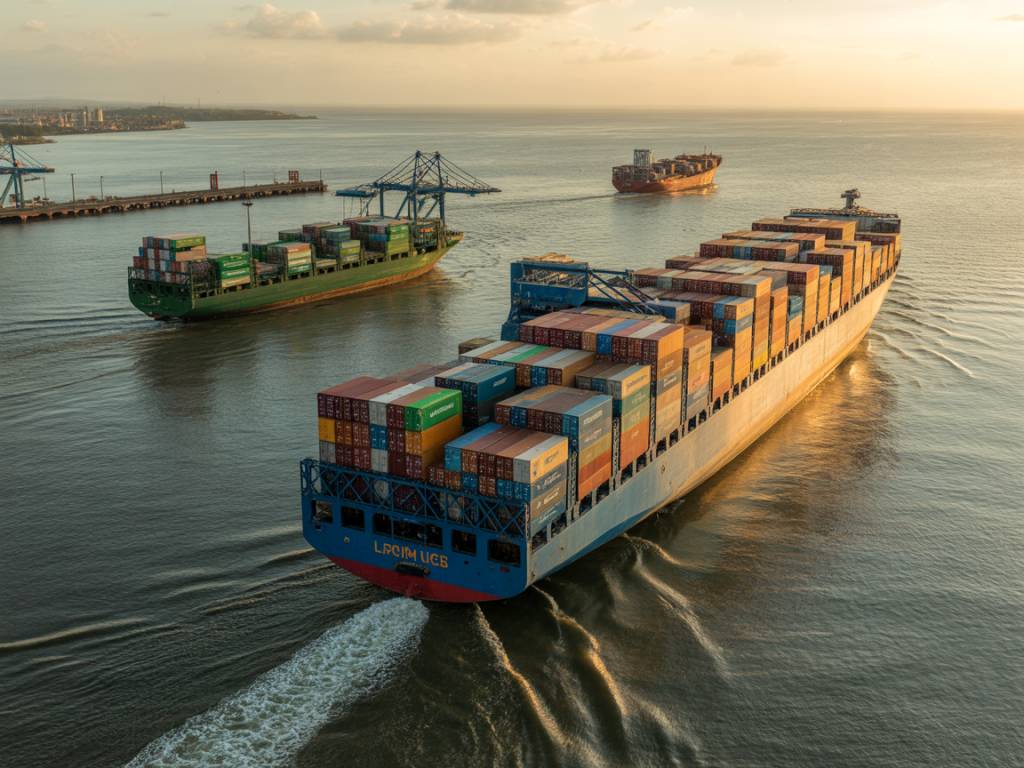

Climate change has moved from a distant environmental concern to a core business risk that is reshaping how global supply chains and logistics networks are designed, operated, and financed. From extreme weather disrupting ports to new carbon regulations altering cost structures, climate resilience is now a strategic imperative rather than an optional sustainability add-on.
From efficiency to resilience as the primary design principle
For decades, global supply chains were engineered around cost and efficiency. Lean inventories, single sourcing, just-in-time flows, and hyper-optimized transport networks minimized working capital and logistics costs. Climate volatility is challenging these assumptions.
As heatwaves, floods, droughts, wildfires, and storms become more frequent and severe, the most efficient network on paper can rapidly become the most fragile in practice. The shift underway is subtle but profound: resilience is beginning to rival, and sometimes override, pure efficiency as the primary design principle of supply chains.
This evolution changes the metrics used by supply chain leaders. Traditional KPIs such as cost per unit, on-time delivery, and inventory turns are now complemented by indicators like time-to-recover, time-to-survive, climate hazard exposure, and carbon intensity per shipment. Boards and investors increasingly ask how robust the supply chain is under various climate scenarios.
Network redesign driven by climate risk mapping
One of the clearest manifestations of this shift is the redesign of production and distribution networks based on climate risk mapping. Firms are no longer evaluating locations solely on labor cost, tax incentives, or proximity to markets; they are incorporating physical climate risk into their footprint decisions.
Typical actions include:
- Assessing exposure of factories, ports, warehouses, and key suppliers to floods, sea-level rise, hurricanes, heat stress, and water scarcity.
- Revising location strategies to avoid highly exposed zones, or investing in protective infrastructure where relocation is impossible.
- Establishing regionalized or “multi-local” production hubs to reduce dependency on a single geography vulnerable to climate shocks.
- Creating redundant routing options for critical flows, including alternative ports, cross-border corridors, and rail-road combinations.
Specialized climate analytics platforms and geospatial tools are becoming essential products for supply chain planners, integrating weather patterns, infrastructure data, and supplier locations. Logistics real estate players are also marketing “climate-resilient” warehouses built above flood plains, equipped with enhanced drainage, and designed to withstand temperature extremes.
Diversified sourcing and supplier climate maturity
Supplier diversification, long a risk-management practice for geopolitical disruptions, is now being rethought through the lens of climate exposure. Multi-sourcing is increasingly used not just to mitigate commercial or quality risks, but to spread climate risk across regions and ecosystems.
Companies are evaluating suppliers on two dimensions: their physical exposure to climate hazards and their organizational maturity in managing these risks. Key questions include:
- Does the supplier have business continuity and disaster recovery plans tested against extreme weather scenarios?
- Are facilities hardened against floods, storms, and heatwaves, with backup power and water systems?
- How transparent is the supplier regarding emissions, energy sources, and adaptation investments?
- Can the supplier shift production to alternative sites in case of extended disruption?
Supplier scorecards now frequently include climate resilience and decarbonization criteria. This is shifting demand toward service providers and technology vendors that offer tools for supplier monitoring, traceability, and ESG risk scoring, supporting procurement teams in building more robust supplier portfolios.
Inventory strategies evolving under climate volatility
Just-in-time practices proved vulnerable when extreme events shut down ports, rail lines, and industrial zones. Climate-driven disruptions further challenge highly lean systems that lack buffers. In many sectors, the response has been a nuanced move toward “just-in-case” inventory for critical items.
This does not imply a blanket return to high stock levels. Instead, firms are segmenting products and flows according to their climate disruption risk and strategic importance, then tailoring inventory policies accordingly. Examples include:
- Holding higher safety stocks for climate-sensitive raw materials or components with few alternative sources.
- Positioning inventory closer to end markets in multi-node distribution networks to reduce dependency on vulnerable hubs.
- Using advanced demand sensing and predictive analytics to dynamically adapt stock levels based on weather forecasts and disruption signals.
Warehouse automation, robotics, and warehouse management systems (WMS) that can handle more complex, multi-location inventory planning are gaining traction as enabling products. Resilience-oriented inventory strategies increasingly rely on integrated planning tools that balance service levels, cost, and risk exposure.
Transport modes, routing, and low-carbon operations
Transport networks sit on the front line of climate impacts. Heat can deform rails and tarmac, storms can close ports and airports, and low water levels can limit barge capacity. At the same time, transport is a major source of greenhouse gas emissions and under growing regulatory pressure.
Climate resilience in logistics is thus intertwined with decarbonization. Companies are re-evaluating mode choices, routes, and technologies to manage both physical and transition risks. Key shifts include:
- Developing multi-modal capabilities (combining sea, rail, barge, and road) to create routing flexibility when one mode is disrupted.
- Exploring alternative shipping lanes and ports that may be less vulnerable to climate hazards, while planning for new constraints such as changing sea-ice patterns.
- Investing in greener fleets: electric delivery vehicles, LNG or methanol-ready vessels, and more efficient aircraft to reduce emissions and comply with emerging regulations.
- Using real-time visibility platforms and dynamic routing software to reroute shipments proactively in response to storms, fires, or floods.
Transport management systems (TMS), fleet telematics, and real-time tracking platforms are central to these transformations. Providers that couple emissions accounting with disruption alerts and alternative routing options are particularly well-positioned as firms seek tools that simultaneously support resilience and sustainability commitments.
Digital twins, scenario planning, and predictive risk management
Climate resilience requires not only physical adaptations, but also better foresight and decision-making capabilities. Digital twins of supply chains—virtual replicas of networks, assets, and flows—are emerging as a powerful instrument to simulate climate-related shocks and test response strategies.
Using historical weather data, climate projections, and disruption records, companies can model how floods, prolonged heatwaves, or port closures would impact lead times, costs, and customer service. They can then evaluate mitigation levers such as:
- Reconfiguring distribution center locations and capacities.
- Adding or removing suppliers and transport lanes.
- Adjusting safety stock policies and production allocations.
Scenario-based planning tools, often delivered as cloud software, are being adopted alongside traditional planning suites. They enable supply chain teams to test “what if” scenarios and prepare playbooks for extreme events. Coupled with predictive analytics that integrate weather forecasts and early-warning signals, these tools help organizations move from reactive firefighting to proactive risk management.
Governance, regulation, and stakeholder expectations
Climate resilience is also being institutionalized through governance and regulation. Boards are increasingly assigning explicit responsibility for climate-related risks within executive teams, often linking incentives to resilience and sustainability metrics.
Regulatory frameworks play a growing role. Disclosure rules that require companies to report on climate risks and adaptation strategies are pushing supply chain functions to quantify exposures and document action plans. Carbon pricing, emissions trading schemes, and transport-specific regulations (such as maritime and aviation decarbonization rules) are altering cost structures and investment priorities.
Customers and investors likewise expect greater transparency. Large buyers demand emissions and resilience data from their logistics providers and upstream suppliers. This is driving adoption of:
- Carbon accounting software and lifecycle assessment tools integrated into logistics and procurement systems.
- Supplier engagement platforms focused on climate reporting, risk assessment, and improvement programs.
- Third-party audits and certifications covering both sustainability and continuity of operations.
Service providers that can document robust climate risk management—backed by data, certifications, and tested continuity plans—gain a competitive edge in tenders and long-term contracts.
Investment priorities and emerging solution ecosystems
As climate resilience becomes embedded in strategy, investment priorities in supply chain and logistics are shifting. Companies are allocating capital not only to traditional efficiency projects but also to risk reduction and adaptation initiatives.
Growing areas of investment include:
- Upgrading infrastructure (warehouses, terminals, yards) to withstand extreme weather, including reinforcement, drainage, and backup utilities.
- Deploying IoT sensors and monitoring systems to track environmental conditions, asset health, and early signs of disruption.
- Adopting integrated planning, TMS, and WMS platforms with built-in climate risk features and emissions modules.
- Partnering with specialized analytics and consulting firms for climate risk assessment, scenario modelling, and adaptation roadmaps.
This ecosystem of products and services—from climate analytics and geospatial tools to resilient logistics facilities, decarbonized fleets, and advanced visibility platforms—is expanding quickly. Buyers are increasingly seeking interoperable solutions that can link physical adaptations with digital intelligence and regulatory compliance.
From vulnerability to strategic advantage
Climate change will continue to test the robustness of global supply chains. However, organizations that approach climate resilience as a strategic transformation—rather than a series of isolated fixes—are beginning to turn vulnerability into advantage.
By redesigning networks, diversifying sourcing, reinforcing critical infrastructure, and embedding predictive risk management into everyday operations, they are not only reducing disruption exposure but also improving reliability, transparency, and stakeholder trust. For many, this transformation aligns closely with decarbonization efforts, creating synergies between environmental goals and operational robustness.
In this context, investments in climate-resilient logistics capabilities, digital tools, and specialized services are no longer purely defensive. They are becoming central to maintaining market access, meeting regulatory expectations, and differentiating on service quality in an increasingly uncertain operating environment.
Climate resilience is now a strategic axis for global supply chains. Firms redesign networks, diversify sourcing, harden infrastructure, and elevate data-driven risk management. Logistics providers deploy greener, redundant transport and inventory strategies. Those combining technology, partnerships, and governance transform climate exposure into operational reliability, regulatory readiness, and competitive differentiation worldwide.