



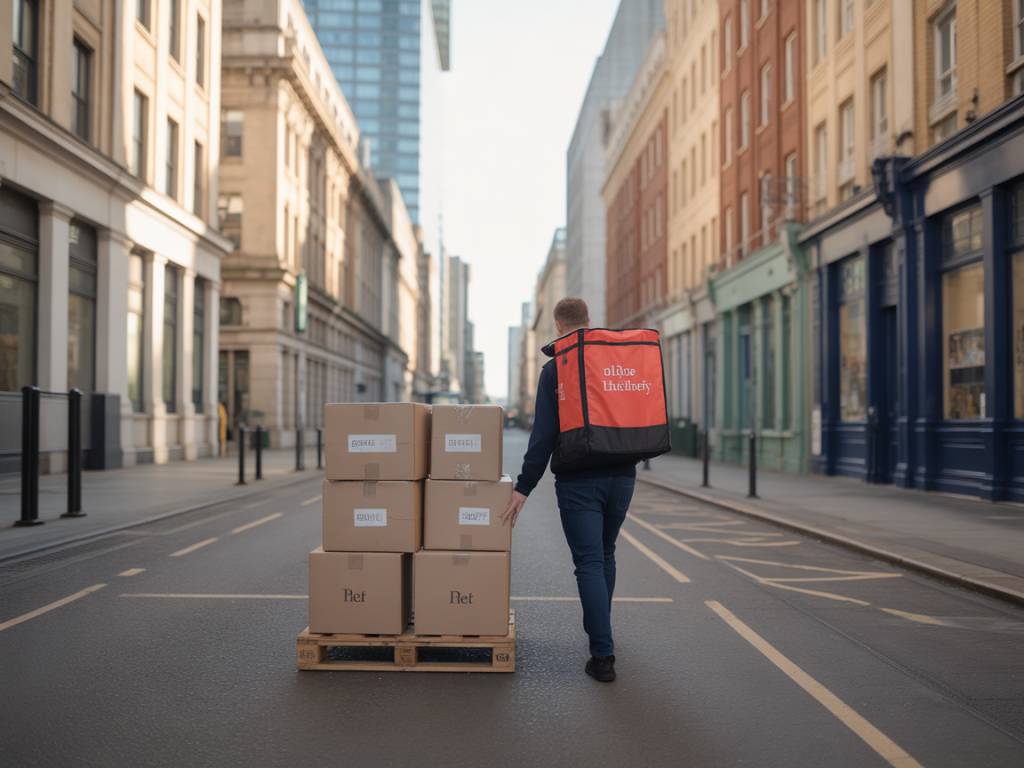

From Next-Day to Same-Day: A Structural Shift in UK E‑Commerce
Same-day delivery in the UK has moved from premium add-on to mainstream expectation, especially in dense urban areas. Rising consumer demand, fuelled by grocery apps, fashion marketplaces and quick-commerce platforms, is forcing retailers, 3PLs and parcel carriers to rethink how and where they store inventory.
At the centre of this shift sits a new type of facility: the urban micro‑fulfilment hub. Compact, strategically located and often heavily digitised, these hubs are quietly reshaping how products move through cities like London, Manchester, Birmingham and Glasgow. Rather than relying solely on large out‑of‑town fulfilment centres, retailers are pushing inventory closer to the end customer, compressing the “order-to-door” window to just a few hours.
What Is an Urban Micro-Fulfilment Hub?
An urban micro-fulfilment hub is a small, high‑intensity logistics site placed within or very close to city centres. It is typically between a few hundred and a few thousand square metres, significantly smaller than the large national or regional fulfilment centres that dominate the UK logistics landscape.
These hubs are designed for speed and flexibility rather than scale alone. They focus on fast-moving SKUs and local demand, relying on streamlined processes and digital systems to process orders quickly and accurately.
Key characteristics often include:
- Proximity to customers: Located in urban zones, often within 3–8 km of dense residential areas.
- Limited but curated assortment: Stocking high-demand, high-velocity items based on local order data.
- Rapid order processing: Layouts optimised for short pick paths and quick dispatch.
- Multi-channel capability: Serving e‑commerce, click‑and‑collect, B2B replenishment and sometimes returns handling.
- Integration with last-mile partners: Direct fulfilment into bike couriers, electric vans or autonomous delivery pilots.
Why the UK Is Ripe for Micro-Fulfilment
The UK market presents a specific combination of drivers that make micro-fulfilment hubs particularly relevant.
Firstly, the UK has one of the highest e-commerce penetration rates in Europe. Online grocery, fashion, electronics and health & beauty categories have all embedded home delivery deeply into consumer habits. Next-day became standard; now same-day is a differentiator.
Secondly, major UK cities are dense, with constrained road networks, congestion charges and clean air zones. Serving these areas exclusively from remote, large warehouses leads to longer transport legs, higher costs and increased emissions. Urban hubs shorten the last mile and reduce the reliance on long van routes from peripheral locations.
Thirdly, commercial real estate is in flux. Retail shrinkage has left vacant high-street units, secondary retail parks and underused car parks, while office use patterns have shifted post-pandemic. These spaces present opportunities for conversion into small-scale logistics hubs and dark stores, often with shorter leases and more flexible terms than traditional big-box warehouses.
How Micro-Fulfilment Hubs Enable Same-Day Delivery
Micro-fulfilment hubs alter the mechanics of same-day delivery at multiple points in the supply chain.
Inventory positioning: By splitting stock across a network of small urban sites, retailers can place popular SKUs close to demand clusters. This reduces lead time and avoids the need to rush products across long distances once the order is placed.
Cut-off times and delivery windows: Because orders are fulfilled locally, retailers can accept later order cut-off times and still deliver within the same day. The physical distance to the customer becomes short enough to make two or more delivery waves possible.
Last-mile elasticity: Micro-hubs are often designed with flexible dispatch zones, allowing quick handover to bikes, cargo bikes, scooters, walking couriers or electric vans. This multi-modal approach makes it easier to dynamically adjust capacity at peak times.
Batching and routing efficiency: Orders from a concentrated local catchment can be batched more effectively, improving route density and lowering the cost per drop. This is especially important in dense city centres where stop density is high but vehicle speed is low.
Operational Models Emerging in the UK
Different players are testing distinct operational approaches, often combining real estate innovation with technology and partnerships.
Retailer-operated micro-hubs: Large grocery and general merchandise chains are turning back-of-store areas, small urban warehouses or dark stores into micro-fulfilment nodes. These sites leverage existing brand infrastructure and store networks while separating fast e-commerce flows from traditional retail operations.
3PL and parcel network hubs: Logistics providers and carriers are establishing urban satellites closer to customers, used both as injection points for parcels and as shared inventory locations for multiple merchants. These hubs can support marketplace sellers and SMEs who cannot justify their own dedicated facilities.
On-demand and quick-commerce nodes: App-based delivery players use compact city locations with a narrow assortment, optimised for one-hour or rapid delivery. While some of the early quick-commerce operators have consolidated, their infrastructure is being repurposed by retailers and logistics partners seeking same-day capability.
Hybrid store–warehouse concepts: Some high-street stores are adopting a hybrid model, combining retail display with a small but optimised fulfilment area dedicated to online orders. Inventory is shared across channels but managed via unified systems that allocate stock to either walk-in customers or online demand.
Technology at the Heart of Micro-Fulfilment
Space is limited and labour is costly in UK city centres, so technology is central to making micro-fulfilment economically viable.
Core technology building blocks typically include:
- Warehouse Management Systems (WMS): Tailored for small footprints, supporting fast put-away, high-velocity picking and real-time visibility across multi-node networks.
- Inventory optimisation tools: Algorithms that decide which SKUs to stock, in what quantities, at which hub, based on local demand patterns and service level targets.
- Order orchestration platforms: Systems that route each order to the most appropriate node, considering stock levels, promised delivery time, courier capacity and cost constraints.
- Automation and robotics: In some cases, goods-to-person systems, shuttle solutions or micro-robots are introduced to increase throughput and reduce picking time in a small footprint.
- Last-mile integration: APIs and platforms that connect hubs with multiple courier partners, enabling real-time booking, tracking and dynamic routing.
UK operators are experimenting with different levels of automation. While fully automated micro-fulfilment systems are gaining attention, many urban hubs are relying on simpler, well-designed manual processes complemented by strong software and scanning technology. The overriding goal is consistency, speed and the ability to scale volumes without sacrificing quality.
Economic and Environmental Implications
Same-day delivery is often associated with high costs and environmental impact, but micro-fulfilment hubs are reshaping this equation.
On the cost side, shorter delivery distances and higher drop density can reduce transportation expenses per order. At the same time, occupancy costs in city centres can be high, and labour is more expensive than in peripheral warehouse locations. The business case depends on balancing these dynamics and leveraging technology to keep productivity high.
Environmentally, urban hubs open up more sustainable last-mile options. Cargo bikes, e‑bikes and small electric vans perform best when distances are short and routes dense. As UK cities tighten emission regulations, such modes become increasingly attractive. Micro-fulfilment hubs can act as consolidation points where line-haul deliveries from regional centres are transferred to low-emission local fleets.
However, there is a trade-off: splitting inventory across many small nodes can increase overall stock levels, risk of obsolescence and handling complexity. Retailers are investing in better demand forecasting and rebalancing flows between hubs to mitigate this risk.
Challenges Facing UK Adoption
Despite clear momentum, several constraints shape how fast and how widely micro-fulfilment can scale in the UK.
- Real estate availability and regulation: Suitable urban sites are limited. Planning rules, change-of-use approvals and local objections can all slow deployment.
- Labour availability: Recruiting and retaining staff for shift work in central locations is challenging, especially when competing with retail and hospitality sectors.
- Profitability pressure: Consumers often expect low or free delivery fees, while same-day promises raise cost-to-serve. The economics must be carefully designed.
- Systems complexity: Running a multi-node network increases IT and operational complexity. Inventory visibility and order allocation become critical failure points if not well managed.
- Brand and neighbourhood impact: Increased movements of vans and bikes, if poorly managed, can generate friction with residents and local authorities.
How Retailers and Logistics Providers Can Prepare
Organisations exploring micro-fulfilment in the UK are taking a phased and data-driven approach.
Start with network design: Detailed analysis of order data, customer locations, delivery promises and transport costs is essential to determine where hubs should be located and how many are needed.
Define assortment strategy: Not every SKU belongs in every hub. Retailers typically focus on fast-moving, high-margin or time-sensitive products, leaving long-tail items in regional centres.
Build strong technology foundations: A scalable WMS, robust inventory visibility and efficient order orchestration provide the backbone. Integrations with last-mile platforms and marketplaces follow.
Pilot, then replicate: Many actors are starting with one or two pilot hubs in high-demand cities, testing operational models and economics before rolling out a broader network.
Partner strategically: Collaborations with property owners, local councils, 3PLs and tech providers help accelerate deployment and spread capital risk.
Outlook: From Experiment to Standard Capability
Urban micro-fulfilment hubs are moving from experimental projects to a standard capability in the UK’s same-day delivery ecosystem. While not every retailer will operate its own network of hubs, most will interact with them—either through 3PL services, carrier networks or marketplace fulfilment solutions.
As consumer expectations continue to evolve, same-day delivery is likely to become a baseline offer in urban UK markets for specific product categories. The competitive edge will lie in reliability, transparency, sustainability and the intelligent use of data to shape where inventory sits and how it moves.
For logistics and supply chain professionals, urban micro-fulfilment is less a passing trend than a structural reconfiguration of the last mile. The coming years will show which models prove resilient, profitable and scalable in the distinct urban fabric of the UK.
50-word summary: Urban micro-fulfilment hubs are reshaping same-day delivery in the UK by positioning curated inventory closer to customers, integrating tightly with last-mile providers and exploiting data and software to manage multi-node networks. Despite real estate, labour and profitability challenges, these compact urban sites are becoming a core element of competitive e‑commerce logistics.